
What Is Crypto? Cryptocurrency Explained for Beginners
Crypto, short for cryptocurrency, is digital money that runs on a blockchain instead of being issued or controlled by a bank or government. This guide explains what crypto is, how it works, the main types of coins, the key terms you’ll come across, and the risks to understand before you buy any.
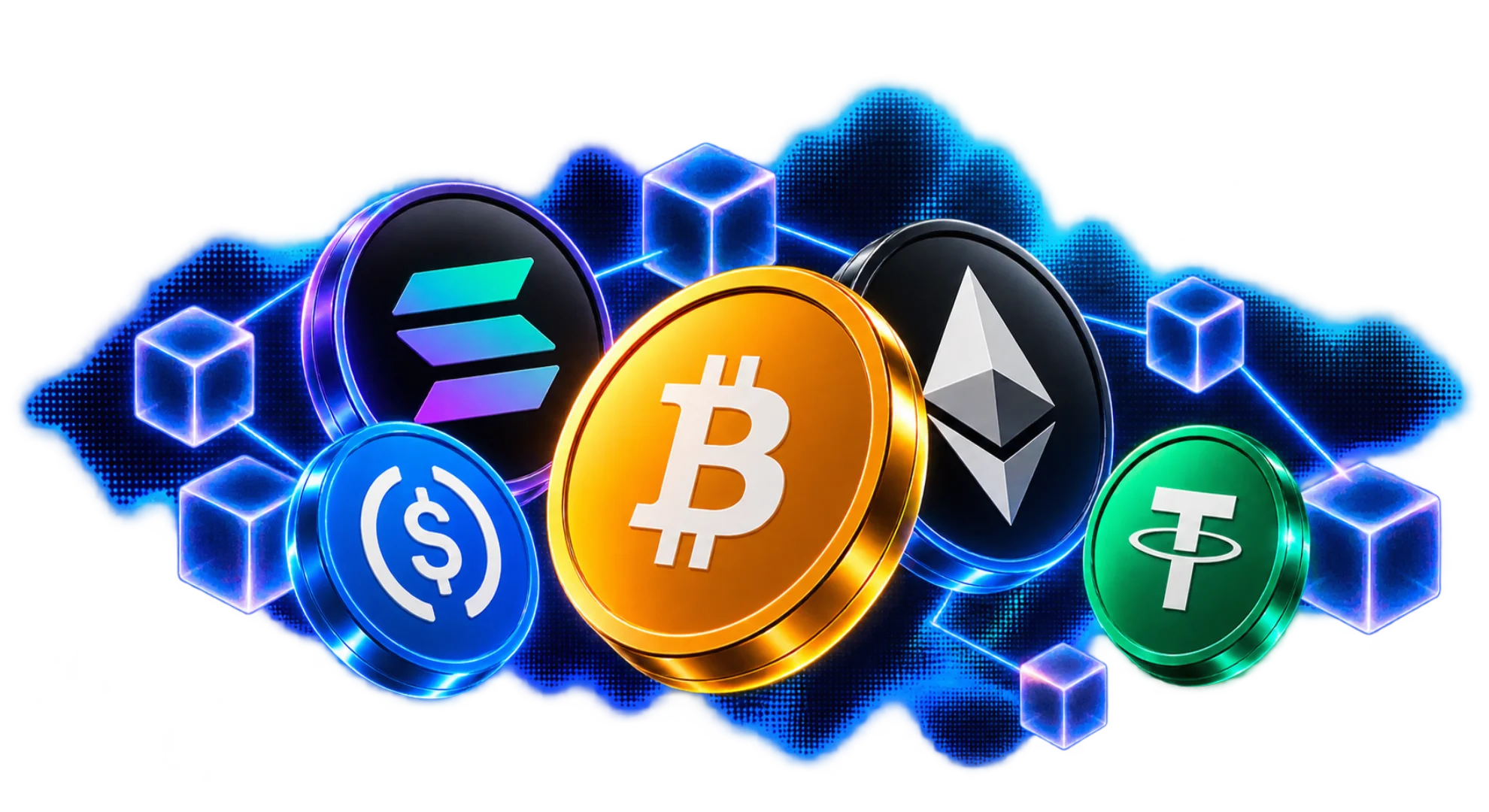
What Is Crypto in Short
If you’re new to crypto, start with these points:
- Crypto is digital money recorded on a public ledger called a blockchain.
- No single bank or government controls most cryptocurrencies; a network of computers keeps the record.
- You hold crypto in a wallet, which is controlled by a private key.
- Bitcoin was the first cryptocurrency, launched in 2009. Today there are thousands.
- Crypto prices can rise and fall sharply, and you can lose money.
What Is Cryptocurrency?
A cryptocurrency is a digital asset that uses cryptography to secure transactions and a blockchain to record who owns what. You can send it to anyone in the world, at any time, without asking a bank for permission. Its value comes from what people are willing to pay for it, not from a government guarantee.
Crypto vs Traditional Money
Traditional money like the naira is issued by a central bank and moves through banks and payment companies. Crypto is issued by software rules and moves directly between wallets on a blockchain. Bank transfers can be reversed or blocked; crypto transfers usually can’t be undone once confirmed.
| Naira | Crypto | |
|---|---|---|
| Issued by | Central Bank of Nigeria | A blockchain protocol or a company |
| Moves through | Banks and payment apps | Blockchain networks |
| Available | Banking hours and app uptime | 24/7 |
| Reversible | Sometimes | Usually not |
| Price | Set by the market and policy | Set by the market, often volatile |
Who Controls Crypto
Most cryptocurrencies are decentralised: thousands of computers around the world keep copies of the blockchain and agree on which transactions are valid. No single company can change the record on its own. Some tokens, such as stablecoins, are issued by companies, which gives those companies some control.
Coins vs Tokens
A coin runs on its own blockchain, such as bitcoin on the Bitcoin network or ether on Ethereum. A token is built on top of an existing blockchain, such as USDT on Tron or Ethereum. In everyday use, people often call both “coins”.
How Cryptocurrency Works
Behind every crypto transfer is a blockchain that records the transaction and a network that agrees it’s valid. You don’t need to understand every technical detail, but knowing the basics helps you avoid costly mistakes.
What a Blockchain Is
A blockchain is a shared digital record of transactions, grouped into blocks and linked in order. Each new block refers to the one before it, so changing an old record would mean changing every block after it. That is what makes blockchains hard to tamper with.
How Transactions Are Confirmed
When you send crypto, your transaction is broadcast to the network. Computers called miners (on Bitcoin) or validators (on Ethereum and many others) check it and add it to a new block. Once it’s confirmed in a block, it becomes part of the permanent record.
What Is a Nonce in Crypto?
A nonce, short for “number used once”, has two common meanings in crypto. In Bitcoin mining, it’s the number miners change again and again to find a valid block, which is the core of proof of work. On Ethereum and similar networks, each wallet also has a transaction nonce, a counter that makes sure each transaction is processed once and in the right order.
Wallets, Public Addresses and Private Keys
A crypto wallet doesn’t store coins; it stores the keys that control them. Your public address is like an account number you can share to receive crypto. Your private key, or seed phrase, is like a master password: whoever has it controls the funds, so never share it.
Types of Cryptocurrency
There are thousands of cryptocurrencies, but most fall into a few groups. Knowing which group a coin belongs to tells you what it’s for and what risks come with it.
Bitcoin
Bitcoin (BTC), launched in 2009 by the pseudonymous Satoshi Nakamoto, is the first and largest cryptocurrency. Its supply is capped at 21 million coins, and many people treat it as a store of value, sometimes called “digital gold”.
Ethereum and Smart Contract Platforms
Ethereum, launched in 2015, lets developers build applications using smart contracts: programs that run automatically on the blockchain. Its coin, ether (ETH), pays for transactions. Solana, BNB Chain and others offer similar platforms.
Stablecoins
Stablecoins such as USDT and USDC are designed to stay at about $1. Many Nigerians use them to hold a dollar balance and to move money quickly. Read our full guide on what a stablecoin is.
Utility and Governance Tokens
Utility tokens give access to a service, such as paying fees on a platform. Governance tokens let holders vote on how a project is run. Their value depends heavily on whether the project is actually used.
Meme Coins
Meme coins, such as Dogecoin, started as jokes or internet trends. Their prices are driven mostly by hype and social media, which makes them among the most volatile and risky assets in crypto.
Key Crypto Terms Explained
A few terms come up in almost every crypto conversation. Understanding them will help you read prices, compare coins and avoid misleading claims.
What Is Market Cap in Crypto?
Market capitalisation, or market cap, is the total value of a cryptocurrency’s circulating supply. It’s calculated by multiplying the current price by the number of coins in circulation. A coin priced at $1 with 1 billion coins in circulation has a market cap of $1 billion. Market cap shows a coin’s size, not whether it’s a good buy.
What Is Liquidity in Crypto?
Liquidity describes how easily you can buy or sell a coin without moving its price much. Highly liquid coins like bitcoin can be traded in large amounts with little price impact. Coins with low liquidity can be hard to sell, and a single large order can move the price sharply.
Volatility
Volatility measures how much and how fast a price moves. Most cryptocurrencies are far more volatile than shares or currencies. A coin can rise or fall by 10% or more in a single day.
Gas and Network Fees
Every transaction on a blockchain pays a small fee to the network, often called gas. Fees vary by network and by how busy it is. Tron and Solana are usually cheap; Ethereum can be more expensive during busy periods.
What Is Web3 in Crypto?
Web3 is the idea of an internet where users own their data, digital assets and identity through blockchains, instead of relying on large platforms. Crypto wallets and tokens are the building blocks of Web3.
Web1, Web2 and Web3 Compared
| Web1 | Web2 | Web3 | |
|---|---|---|---|
| Period | 1990s–early 2000s | Mid-2000s to today | Emerging |
| What users do | Read static pages | Read and create content | Read, create and own |
| Who holds data | Website owners | Large platforms | Users, through wallets |
| Example | Early news sites | Social media | Decentralised apps (dApps) |
What Web3 Looks Like in Practice
In practice, Web3 means logging into apps with a crypto wallet instead of an email, swapping tokens on decentralised exchanges, and owning digital items as tokens. Many Web3 projects are still early, and some exist more as marketing than as working products.
Ways People Use Crypto
People use crypto for different reasons, from saving to trading. In Nigeria, practical uses such as holding dollars and receiving payments from abroad are especially common.
Saving in Dollars With Stablecoins
Many Nigerians keep part of their money in dollar stablecoins to reduce exposure to naira swings. It gives you a dollar balance on your phone, but it’s not a bank account and isn’t insured.
Sending Money Across Borders
Crypto can be sent internationally in minutes, often for lower fees than traditional transfers. Freelancers and families use it to receive payments from abroad.
Trading and Swapping
Some people buy and sell crypto to try to profit from price changes, or swap one coin for another. Trading carries high risk, and most beginners lose money at first.
What Is a Launch Pool in Crypto?
A launch pool is a programme, usually run by an exchange, where you lock up tokens you already hold to receive new tokens from a project that’s about to launch. It’s a way for new projects to distribute tokens. The new tokens are often volatile and can lose value quickly after launch, and your locked tokens can still fall in price during the programme.
Is There a “Best” Crypto to Invest In?
“What is the best crypto to invest in?” is one of the most searched questions in crypto. The honest answer is that there isn’t one. What matters more is knowing how to judge any coin before you put money into it.
Why No One Can Tell You the Best Coin
Crypto prices depend on adoption, regulation, competition and market sentiment, none of which anyone can predict reliably. A coin that suits one person’s goals and risk tolerance may be wrong for another. Be cautious of anyone who claims to know which coin will rise next.
How to Evaluate a Cryptocurrency
Before buying any coin, look at:
- Purpose: what problem does it solve, and is it actually used?
- Market cap and liquidity: larger, more liquid coins are usually easier to buy and sell.
- Supply: how many coins exist, how many more will be created, and who holds them.
- Team and transparency: who builds it, and do they publish clear information?
- Track record: how has it behaved during market downturns?
Red Flags to Watch For
Walk away if you see:
- promises of guaranteed or fixed returns;
- pressure to buy quickly before you “miss out”;
- anonymous teams with no clear product;
- coins you can buy but struggle to sell;
- influencers paid to promote a coin without saying so.
Risks of Cryptocurrency
Crypto can be useful, but it carries real risks. Understanding them before you start is the best protection you have.
Price Volatility
Crypto prices can drop sharply and quickly. Only use money you can afford to lose, and avoid borrowed money.
Scams and Fake Projects
Nigeria has seen several crypto schemes promising high returns that later collapsed. Fake apps, impersonated “support agents” and copycat tokens are also common. Never share your private key or login codes.
Losing Access to Your Wallet
If you lose your private key or recovery details, you can lose your funds permanently. Crypto sent to the wrong address or network usually can’t be recovered.
Crypto in Nigeria
Nigeria is one of the most active crypto markets in Africa. Crypto has become part of how many people save, get paid and send money.
How Nigerians Use Crypto
Common uses include holding USDT as a dollar balance, receiving payments from clients abroad, sending money to family, and trading. Many people buy and sell through P2P marketplaces, which have been a regulated activity under the SEC since 2025.
Is Crypto Legal in Nigeria?
Owning and trading crypto is not illegal in Nigeria. The Securities and Exchange Commission (SEC) oversees digital asset platforms, and the Central Bank of Nigeria lifted its restriction on banks serving crypto companies in December 2023. Since January 2026, gains from selling or swapping crypto are taxable under the Nigeria Tax Act 2025. Check the SEC Nigeria for current rules.
How to Buy Stablecoins in Nigeria
Starting safely takes a few simple steps:
- Learn the basics: wallets, networks and fees.
- Decide on a small budget you can afford to lose.
- Choose a platform and check who holds your funds and whether it’s registered.
- Secure your account with a strong password and two-factor authentication.
- Start with a small amount, often a stablecoin, to learn how transfers work.
- Keep a record of every transaction.
Where a Trading App With an Agent Fits In
Some newer platforms make crypto easier by adding an agent. You describe what you want in plain English, such as “swap 20 USDT to BTC”, the agent prepares the trade, and nothing happens until you confirm it. Sparkling is one example: it runs in Telegram and on the web, every wallet is self-custodial by default, and you can also trade manually. Like any crypto platform, it carries risk.
Further Reading
Want to go deeper? These guides explain related topics:
Frequently Asked Questions
Quick answers to common beginner questions about crypto.
FAQ
What is crypto in simple words?
Crypto is digital money recorded on a blockchain. It’s controlled by a network of computers rather than a bank, and you hold it in a wallet secured by a private key.
What is the best crypto to invest in?
There’s no single best crypto. It depends on your goals, budget and risk tolerance, and no one can reliably predict prices. Judge any coin by its purpose, market cap, liquidity and team, and avoid anyone promising guaranteed returns.
What is market cap in crypto?
Market cap is the total value of a coin’s circulating supply: the current price multiplied by the number of coins in circulation. It shows size, not quality.
What is liquidity in crypto?
Liquidity is how easily you can buy or sell a coin without moving its price. High liquidity means faster trades and smaller price impact.
What is Web3 in crypto?
Web3 is the idea of an internet where users own their data and assets through blockchains and crypto wallets, rather than relying on large platforms.
What is a launch pool in crypto?
A launch pool is a programme where you lock tokens you already hold to receive new tokens from a project before or at launch. The new tokens are often volatile.
What is a nonce in crypto?
A nonce is a “number used once”. In Bitcoin mining, it’s the number miners change to find a valid block. On networks like Ethereum, it’s a counter that keeps each wallet’s transactions in order.
Is crypto legal in Nigeria?
Yes, owning and trading crypto is not illegal in Nigeria. Digital asset platforms are overseen by the SEC Nigeria, and since 2026 gains are taxable under the Nigeria Tax Act 2025.
Updated: