
What Is Stablecoin? Meaning, Types and How Stablecoins Work in Nigeria
A stablecoin is a cryptocurrency designed to keep a steady price, usually $1, by being linked to a real-world asset such as the US dollar. This guide explains what stablecoins are, how they hold their value, the main types and coins, why they matter in Nigeria and across Africa, and the risks to understand before you hold one.
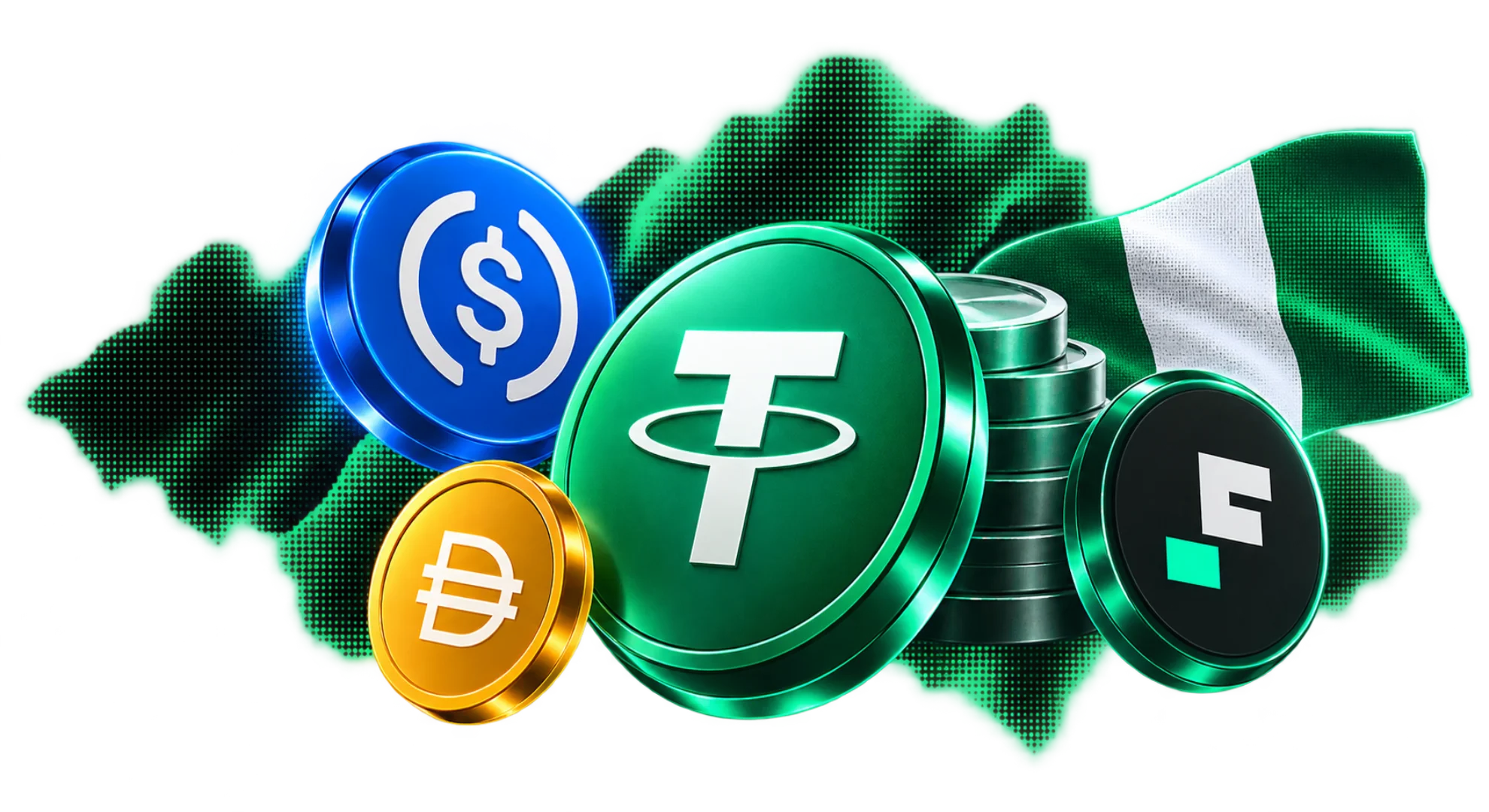
Stablecoin Meaning in Short
If you only need the basics, here they are:
- A stablecoin is a digital token built to hold a stable value, most often $1.
- The most widely used stablecoins, USDT and USDC, are backed by reserves of cash and short-term US government debt.
- Stablecoins move on blockchains such as Tron, Ethereum and Solana, so they can be sent worldwide in minutes.
- Many Nigerians use them to keep a dollar balance on their phone and to protect savings from naira swings.
- A stablecoin is not a bank account. It is not insured, and it can briefly lose its peg.
What Is Stablecoin?
A stablecoin is a type of cryptocurrency whose price is pegged to another asset, usually a national currency like the US dollar. Where bitcoin’s price can move 5–10% in a day, a dollar stablecoin aims to stay at $1. That stability is what makes it useful for saving, sending and trading.
Why It’s Called a “Stable” Coin
The name comes from its purpose: to stay stable relative to the asset it tracks. One USDT or one USDC should always be worth about one US dollar. The issuer backs each token with reserves and lets large holders exchange tokens for dollars, which keeps the price close to $1.
Stablecoin vs Bitcoin vs Naira
The three behave very differently:
| Stablecoin (USDT, USDC) | Bitcoin | Naira | |
|---|---|---|---|
| Price goal | Stay at about $1 | No target; set by the market | Set by the market and the CBN |
| Volatility | Low, unless it loses its peg | High | Can be high against the dollar |
| Issued by | A private company | No issuer | Central Bank of Nigeria |
| Moves on | Blockchains, worldwide | Bitcoin blockchain | Banks and payment systems |
| Insured | No | No | Bank deposits are insured by NDIC |
How Do Stablecoins Maintain Their Value?
Most stablecoins don’t stay at $1 by chance. Two mechanisms work together: the reserves behind each token, and traders who profit when the price drifts away from $1.
Reserves and Redemption
For fiat-backed stablecoins, the issuer holds reserves, mainly cash and short-term US Treasury bills, at least equal to the number of tokens in circulation. Verified customers can redeem tokens with the issuer for dollars, and can create new tokens by depositing dollars. That promise of redemption is the foundation of the $1 price.
Arbitrage: Why the Price Stays Near $1
If a stablecoin trades at $0.99, traders buy it cheaply and redeem it for $1. If it trades at $1.01, they create new tokens for $1 and sell them. Both actions push the price back towards $1. This only works while people trust the reserves, which is why reserve quality matters so much.
Types of Stablecoins
Stablecoins are grouped by what backs them. The type tells you a lot about how a stablecoin behaves under pressure and who you are trusting when you hold it.
Fiat-Backed Stablecoins (Backed by Real USD)
These are backed one-to-one by cash and cash-like assets held by the issuer, such as short-term US Treasuries. USDT and USDC are the best-known examples. They are the most widely used type and the closest thing to “digital dollars”, but you are trusting the issuer to hold and manage the reserves properly.
Crypto-Backed Stablecoins
These are backed by other cryptocurrencies locked in smart contracts, usually more than the value of the stablecoins issued, to absorb price drops. DAI (now also issued as USDS) is the main example. They don’t depend on a bank, but they rely on code and on the value of the crypto collateral.
Commodity-Backed Stablecoins
These are linked to physical assets, most often gold. PAX Gold (PAXG) and Tether Gold (XAUT) each represent a specific amount of gold held in vaults. Their price follows gold rather than the dollar, so they are “stable” only relative to gold.
Algorithmic Stablecoins and Why They Failed
Algorithmic stablecoins tried to hold $1 without full reserves, using code to expand and shrink supply. The best-known example, TerraUSD (UST), lost its peg in May 2022 and collapsed to almost zero, wiping out billions of dollars. Since then, regulators and users have largely moved away from this model.
Stablecoin List: The Main Stablecoins Today
Hundreds of stablecoins exist, but a handful account for most of the market. This list covers the ones you are most likely to see on platforms used in Nigeria.
| Stablecoin | Issuer | Type | Pegged to | Common networks |
|---|---|---|---|---|
| USDT | Tether | Fiat-backed | US dollar | Tron, Ethereum, BNB Chain, Solana |
| USDC | Circle | Fiat-backed | US dollar | Ethereum, Solana, Base, others |
| DAI / USDS | Sky (formerly MakerDAO) | Crypto-backed | US dollar | Ethereum |
| PYUSD | Paxos for PayPal | Fiat-backed | US dollar | Ethereum, Solana |
| RLUSD | Ripple | Fiat-backed | US dollar | XRP Ledger, Ethereum |
| PAXG | Paxos | Commodity-backed | Gold | Ethereum |
| cNGN | Africa Stablecoin Consortium | Fiat-backed | Nigerian naira | Several networks |
USDT (Tether)
USDT, launched in 2014, is the largest stablecoin by market value and the most traded. Tether says its reserves are held mostly in US Treasury bills and cash, and publishes regular attestations. USDT on the Tron network (TRC20) is especially popular in Nigeria because transfers are cheap.
USDC (Circle)
USDC, launched in 2018 and issued by Circle, is the second-largest dollar stablecoin. Its reserves are held in cash and short-term US Treasuries, with monthly reports from an independent accounting firm. USDC is widely used by regulated platforms and payment companies.
Other Dollar Stablecoins
Other dollar stablecoins include DAI/USDS (crypto-backed), PYUSD (issued for PayPal) and RLUSD (issued by Ripple). They are smaller than USDT and USDC, and support for them varies between platforms.
Naira and Other African Stablecoins
Local-currency stablecoins are starting to appear in Africa. cNGN is a naira-pegged stablecoin, approved by the SEC in 2025, designed to let Nigerians use the naira on blockchains. These are much newer and smaller than dollar stablecoins, so check where they are supported before using them.
USDT vs USDC: Comparison Table
USDT and USDC both aim to stay at $1, but they differ in how they report reserves and where they are most used.
| USDT | USDC | |
|---|---|---|
| Issuer | Tether | Circle |
| Launched | 2014 | 2018 |
| Reserves | Mostly US Treasuries and cash, plus other assets | Cash and short-term US Treasuries |
| Reporting | Regular attestations | Monthly independent reports |
| Popular in Nigeria on | Tron (TRC20), BNB Chain | Ethereum, Solana, Base |
| Can freeze addresses | Yes | Yes |
Neither is risk-free. USDT is more widely available on P2P markets in Nigeria; USDC is often preferred by regulated platforms.
What Is Not a Stablecoin: Bitcoin, XRP and Others
Not every well-known cryptocurrency is a stablecoin. Bitcoin (BTC) has no peg and no reserves, and its price is set entirely by the market, so it can rise or fall sharply. XRP is also not a stablecoin: it is the native token of the XRP Ledger, and its price moves freely. Ripple, the company associated with XRP, issues a separate stablecoin called RLUSD. The same applies to ETH, SOL and most other coins: if a token has no peg, it isn’t a stablecoin.
Why Are Stablecoins Important?
Stablecoins have become one of the most used products in crypto because they combine the stability of the dollar with the speed of blockchains. For people in countries with volatile currencies, that combination solves real problems.
Protection From Inflation and Currency Swings
When a local currency loses value, holding part of your money in dollars can protect its purchasing power. Stablecoins make that possible from a phone, without a domiciliary bank account. They don’t remove risk, but they replace naira exchange-rate risk with stablecoin risk.
Fast, Low-Cost Transfers
Stablecoins can be sent to anyone, anywhere, at any time, usually arriving within minutes. On low-cost networks such as Tron or Solana, fees are often a fraction of a dollar, compared with traditional international transfers.
The Role of Stablecoins in the Crypto Ecosystem
Stablecoins are the base currency of crypto markets. Traders use them to move between assets, park value when markets are volatile, and price other tokens. Most trading pairs on exchanges, such as BTC/USDT, use a stablecoin on one side.
Stablecoin APIs for Businesses and Developers
Issuers and payment companies offer stablecoin APIs that let businesses accept, send and hold stablecoins in their own apps. These are aimed at companies and developers, not individual users, and usually require a business account and verification.
Same Stablecoin, Different Networks
USDT and USDC exist on several blockchains at once. They are the same coin with the same $1 value, but they travel on different networks with different fees, and the networks don’t talk to each other directly.
TRC20, ERC20, BEP20 and Solana Explained
These labels describe the network a token runs on:
- TRC20 is USDT on the Tron network: low fees, very popular in Nigeria.
- ERC20 is the Ethereum standard: widely supported, but fees can be higher.
- BEP20 is BNB Chain: low fees, common on some exchanges.
- Solana is fast and low-cost, and increasingly used for USDC.
What Happens If You Send on the Wrong Network
If you send USDT on one network to an address that only supports another, the funds may not arrive and can be lost. Always check that the sending and receiving networks match before you confirm, and send a small test amount first.
Stablecoins in Africa
Africa has become one of the most active regions for stablecoins. In many African countries, stablecoins are used less for speculation and more for everyday financial needs.
Why Africa Is One of the Biggest Stablecoin Markets
Volatile local currencies, limited access to US dollars, and expensive cross-border payments make stablecoins especially useful across Africa. Freelancers get paid from abroad, families send money home, and small businesses pay suppliers, often using USDT or USDC on low-cost networks.
Stablecoins in Nigeria
Nigeria is one of the largest crypto markets in Africa, and stablecoins make up a large share of activity. Many Nigerians use USDT to keep a dollar balance on their phone, receive payments from abroad and move between naira and dollars, often through P2P marketplaces. After the 2023 policy change that allowed banks to serve crypto companies again, the market has continued to grow.
How to Buy Stablecoins in Nigeria
There are three common ways to get stablecoins in Nigeria. Each has different costs and risks, so choose based on how much you’re buying and how comfortable you are with crypto.
P2P Marketplaces
On P2P platforms, you buy USDT directly from another person, usually paying by bank transfer, while the platform holds the coins in escrow. Check the seller’s rating, never release payment outside the platform, and watch for fake payment confirmations.
Local Crypto Exchanges
Some exchanges operating in Nigeria let you deposit naira and buy stablecoins directly. Check whether the exchange is registered with the SEC Nigeria, and compare its fees and spreads.
Self-Custodial Apps and Card Top-Ups
Some apps let you top up with a bank card through an on-ramp provider or receive stablecoins from another wallet. With a self-custodial app, the stablecoins sit in a wallet only you control.
Risks of Stablecoins
Stablecoins are calmer than most crypto, but they are not risk-free. These are the main risks to know before you hold a meaningful amount.
Depegging
A stablecoin can temporarily lose its $1 value. In March 2023, USDC briefly fell to about $0.87 after a US bank holding part of its reserves failed, before recovering. Algorithmic stablecoins like UST collapsed completely.
Issuer and Reserve Risk
With fiat-backed stablecoins, you are trusting the issuer to hold enough reserves and to honour redemptions. If an issuer runs into legal or financial trouble, the token’s value could be affected.
Frozen Addresses
Issuers such as Tether and Circle can freeze stablecoins held at specific addresses, usually at the request of law enforcement. This rarely affects ordinary users, but it means fiat-backed stablecoins are not fully outside anyone’s control.
A Stablecoin Is Not a Bank Account
Holding USDT or USDC gives you a dollar balance, not a dollar bank account. There is no deposit insurance, no NDIC protection and no bank to call if you send funds to the wrong address. Scams using fake tokens and fake “support agents” are also common.
Stablecoin Regulation
As stablecoins have grown, governments have started regulating who can issue them and how reserves must be held. Rules differ from country to country and are still changing.
Global Rules for Stablecoin Issuers
The European Union regulates stablecoin issuers under its MiCA framework, and the United States passed federal stablecoin legislation in 2025. Both require issuers to hold high-quality reserves and publish regular reports.
Stablecoins and the Law in Nigeria
In Nigeria, the Securities and Exchange Commission (SEC) oversees digital asset platforms. Under the Investments and Securities Act 2025, digital assets are treated as securities, and platforms need an SEC licence. Buying and holding stablecoins is not illegal, but platforms serving Nigerians are expected to be registered. Since January 2026, gains from selling or swapping crypto are taxable under the Nigeria Tax Act 2025. Check the SEC Nigeria and the Nigeria Revenue Service (NRS) for current rules.
Where a Trading App With an Agent Fits In
Some newer platforms combine a self-custodial wallet with an agent that prepares trades for you. Sparkling is one example. You can keep a dollar balance in stablecoins such as USDT or USDC and swap between tokens across networks. The agent prepares each trade, and nothing happens until you confirm it. Sparkling runs in Telegram and on the web at app.sparkl.ing, every wallet is self-custodial by default, and you can also trade manually without the agent. Like any platform, it carries risk.
Further Reading
These short definitions explain terms that come up often when you learn about stablecoins.
What Is Inflation?
Inflation is the rise in prices over time, which means each unit of a currency buys less. High inflation is one of the main reasons people look for ways to hold value in other currencies or assets.
What Is Volatility?
Volatility measures how much and how quickly a price moves. Bitcoin is highly volatile; stablecoins are designed to have very low volatility.
What Is ERC-20?
ERC-20 is the technical standard for tokens on the Ethereum network. USDT and USDC on Ethereum are ERC-20 tokens, which is why you see “ERC20” when choosing a network.
How to Send Crypto
Sending crypto means transferring tokens from your wallet to another address on the same network. Always check the address and the network before you confirm, because blockchain transfers can’t be reversed.
Frequently Asked Questions
Quick answers to the questions people ask most about stablecoins.
FAQ
Is USDC a stablecoin?
Yes. USDC is a fiat-backed stablecoin issued by Circle and designed to stay at $1, backed by cash and short-term US Treasuries.
Is USDT a stablecoin?
Yes. USDT (Tether) is the largest fiat-backed stablecoin, designed to stay at $1 and backed mainly by US Treasuries and cash.
Which stablecoin is backed by real USD?
Fiat-backed stablecoins such as USDC, USDT and PYUSD are backed by US dollar reserves, mainly cash and short-term US Treasury bills. USDC publishes monthly reports on its reserves.
Is XRP a stablecoin?
No. XRP is the native token of the XRP Ledger, and its price moves freely. Ripple issues a separate stablecoin called RLUSD.
Is BTC a stablecoin?
No. Bitcoin has no peg and no reserves, so its price can rise or fall sharply.
Is there a stablecoin API?
Yes. Issuers and payment providers offer APIs that let businesses accept, send and hold stablecoins. They are designed for companies and developers and usually require a business account.
Is USDT legal in Nigeria?
Buying and holding USDT is not illegal in Nigeria. Platforms that offer crypto services are overseen by the SEC Nigeria, and since 2026 gains are taxable under the Nigeria Tax Act 2025
Can a stablecoin lose its value?
Yes. A stablecoin can temporarily lose its peg during market stress, and algorithmic stablecoins have collapsed completely.
Can my stablecoins be frozen?
Issuers like Tether and Circle can freeze tokens at specific addresses, usually at the request of authorities. This rarely affects ordinary users.
Updated: